
Dog Collar Size Chart: How to Measure Your Dog for the Perfect Fit
June 21, 2026 · 6 min read
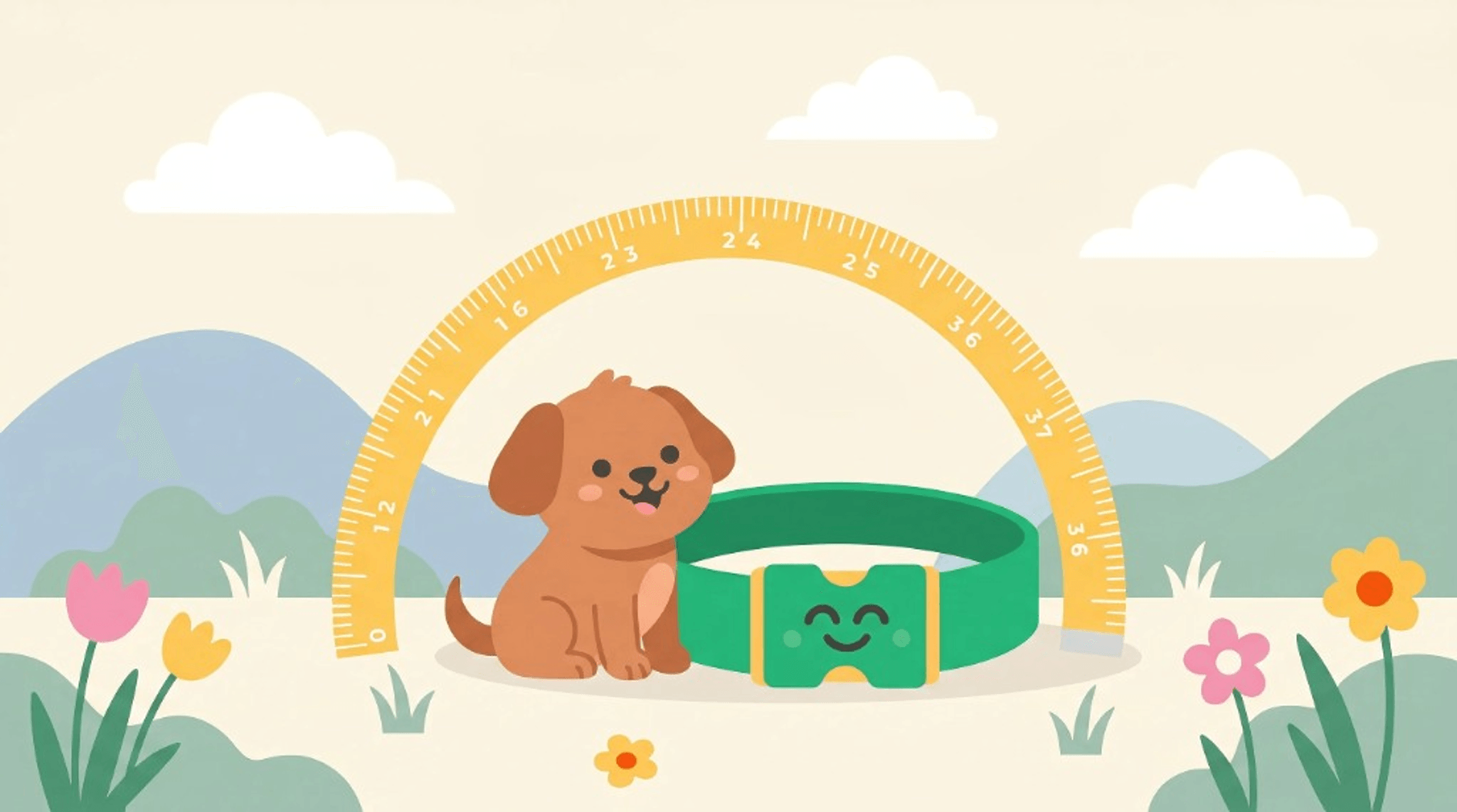
A properly fitted collar is the difference between a happy pup and a frustrated one. It is not just about looks, it is about safety, comfort, and preventing escape. Our community asks all the time how to find that sweet spot for fit, so here is everything you need to know, plus a simple size chart you can measure against in under a minute.
Why proper fit matters
A collar that is too tight can cause discomfort, rubbing, and even skin irritation. A collar that is too loose creates a safety risk, if your dog pulls hard or gets spooked, they can slip right out. Proper fit is the foundation of every walk, and it matters most for puppies, growing dogs, and dogs with sensitive skin. The good news is that getting it right takes about two minutes and one piece of string or a soft measuring tape.
The two-finger rule
This is the gold standard for pet owners everywhere. Once the collar is buckled, you should be able to slide two fingers comfortably between the collar and your dog's neck. If you have to force your fingers in, it is too tight. If you can fit your whole hand, it is definitely too loose. Two fingers, snug but not tight, is exactly where you want to be.
How to measure your dog step by step
It takes about two minutes from start to finish, or skip the math with our interactive sizing calculator:
- Wrap a soft measuring tape or a piece of string around the base of your dog's neck, where the collar naturally sits.
- Keep it snug but not tight, leaving room for those two fingers.
- If you used string, lay it flat against a ruler to get the measurement in inches.
- Add the two-finger allowance if your tape was pulled fully snug, roughly one to two inches depending on your dog's size.
- Match your number to the size chart below.
Dog collar size chart
Use your neck measurement to find the right Dazey size. When your dog falls between two sizes, size up, a little extra room on the adjustment range is always better than a collar that runs short. Our cute dog collars are adjustable within their size ranges, so you get wiggle room as your pup grows or fluffs up between grooming days.
| Size | Neck measurement | Typical breeds |
|---|---|---|
| XS | 7–10 in | Chihuahua, Yorkie, toy breeds, young puppies |
| S | 10–14 in | Mini Dachshund, Pomeranian, small terriers |
| M | 14–18 in | Beagle, Cocker Spaniel, French Bulldog |
| L | 18–22 in | Labrador, Golden Retriever, Australian Shepherd |
| XL | 22–26 in | German Shepherd, Rottweiler, larger mixes |
Expert tips for accuracy
Tip 1: Measure at the right time
Measure after exercise, not immediately after a bath. A wet coat can add bulk, leading to a collar that feels too tight once it dries.
Tip 2: Consider the head size
If your dog has a large head relative to their neck, choose a collar with a breakaway or side-release buckle to prevent choking hazards and to make sure the collar can actually go on and off.
Tip 3: Check the buckle position
The buckle should sit comfortably at the bottom of the neck, not digging into the throat or sliding up toward the ears.
Tip 4: Re-measure regularly
Puppies grow fast, and adult dogs can fluctuate with season, exercise, and age. Re-measure every two to three months to keep the fit perfect.
How tight should a dog collar be, really?
Snug enough that it will not slip over the ears if your dog backs up, loose enough that two fingers fit underneath without forcing. If the fur is parting or the skin is bunching, loosen it a notch. If you can pull the collar forward over the jaw, tighten it. When in doubt, watch your dog, scratching at the collar, red skin, or a collar that spins freely are all signs the fit needs adjusting.
Ready to find the perfect fit?
Once you have your measurement, the hard part is over. Every Dazey collar is soft, durable, and adjustable, so you can dial in that two-finger fit and get back to the walks, naps, and zoomies. Pick your dog's size, then choose the pattern your pup deserves.

Head of content
Siobhan leads content at Dazey, telling stories and writing guides for dogs and the people who love them.